
Descripción del producto
El Electroporador de Genes SCIENTZ-2CS consta de la unidad principal, el vaso de electroporación de genes y cables de conexión específicos. Utiliza principalmente la electroporación para introducir ADN en células competentes, células vegetales y animales, y células de levadura. Comparado con otros métodos, el electroporador de genes ofrece alta repetibilidad, alta eficiencia, facilidad de operación y control preciso. Además, la electroporación no tiene genotoxicidad, lo que la convierte en una técnica esencial en biología molecular.
Principio de funcionamiento
La electroporación, también conocida como electroporación celular, es un método clave para introducir en las células macromoléculas exógenas como ADN, ARN, ARNsi y proteínas, así como pequeñas moléculas.
Bajo la influencia de un fuerte campo eléctrico transitorio, la membrana celular se vuelve permeable, permitiendo que sustancias exógenas cargadas entren en la célula de forma similar a la electroforesis. Debido a la alta resistencia de la bicapa de fosfolípidos de la membrana celular, el voltaje a través de la célula es soportado principalmente por la membrana, con un voltaje mínimo en el citoplasma. Esto provoca una citotoxicidad insignificante durante la electroporación en condiciones normales. Una vez que el ADN u otras sustancias atraviesan la membrana, permanecen cerca de ella antes de que los mecanismos celulares las transporten al núcleo o a otras partes de la célula.
Dado que la electroporación se basa en métodos físicos, las características moleculares de la superficie celular tienen un efecto mínimo sobre el proceso. A diferencia de los métodos de transfección química o de vectores virales, la electroporación puede aplicarse a todo tipo de células y es fácilmente cuantificable.
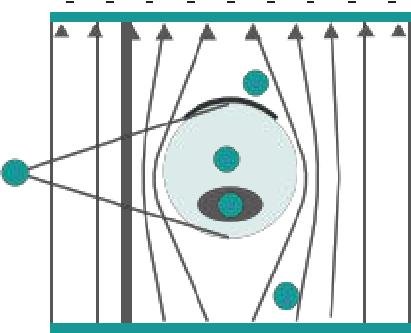
Electroporación celular Diagrama del campo eléctrico
1 La membrana celular actúa como aislante, provocando la distorsión de la corriente eléctrica en el fluido de electroporación próximo a la célula.
2 En un circuito en serie, cuanto mayor es la resistencia, mayor es la tensión; la mayor parte de la tensión es soportada por la membrana celular.
3 Sólo se electropora eficazmente un extremo de la célula.
4 El voltaje en el citoplasma es mínimo; el ADN se detiene en la membrana tras la electroporación y se diffuye lentamente en la célula a través de mecanismos celulares.
5 El voltaje en la membrana nuclear es extremadamente bajo, sin voltaje en el interior del núcleo, por lo que no hay genotoxicidad durante la electroporación.
Características

Aplicación
- Electroporación de bacterias, levaduras y otros microorganismos.
- Transfección de células de mamífero, tejidos vegetales y protoplastos.
- Hibridación celular y fusión de genes.
- Introducción de genes marcadores con fines de etiquetado e indicación.
- Introducción de fármacos, proteínas, anticuerpos y otras moléculas para estudiar la estructura y función celulares.
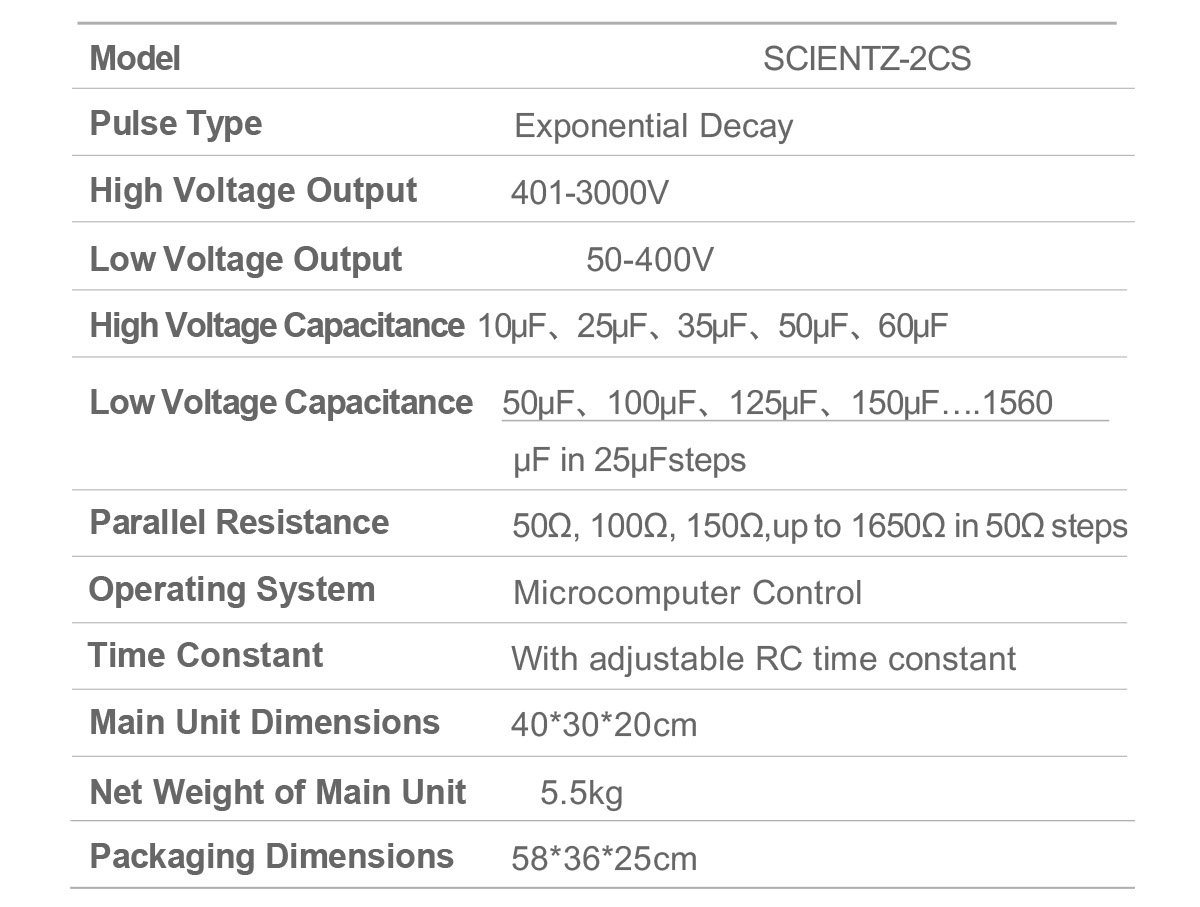
Parámetros técnicos
Índices de conversión para distintas cepas
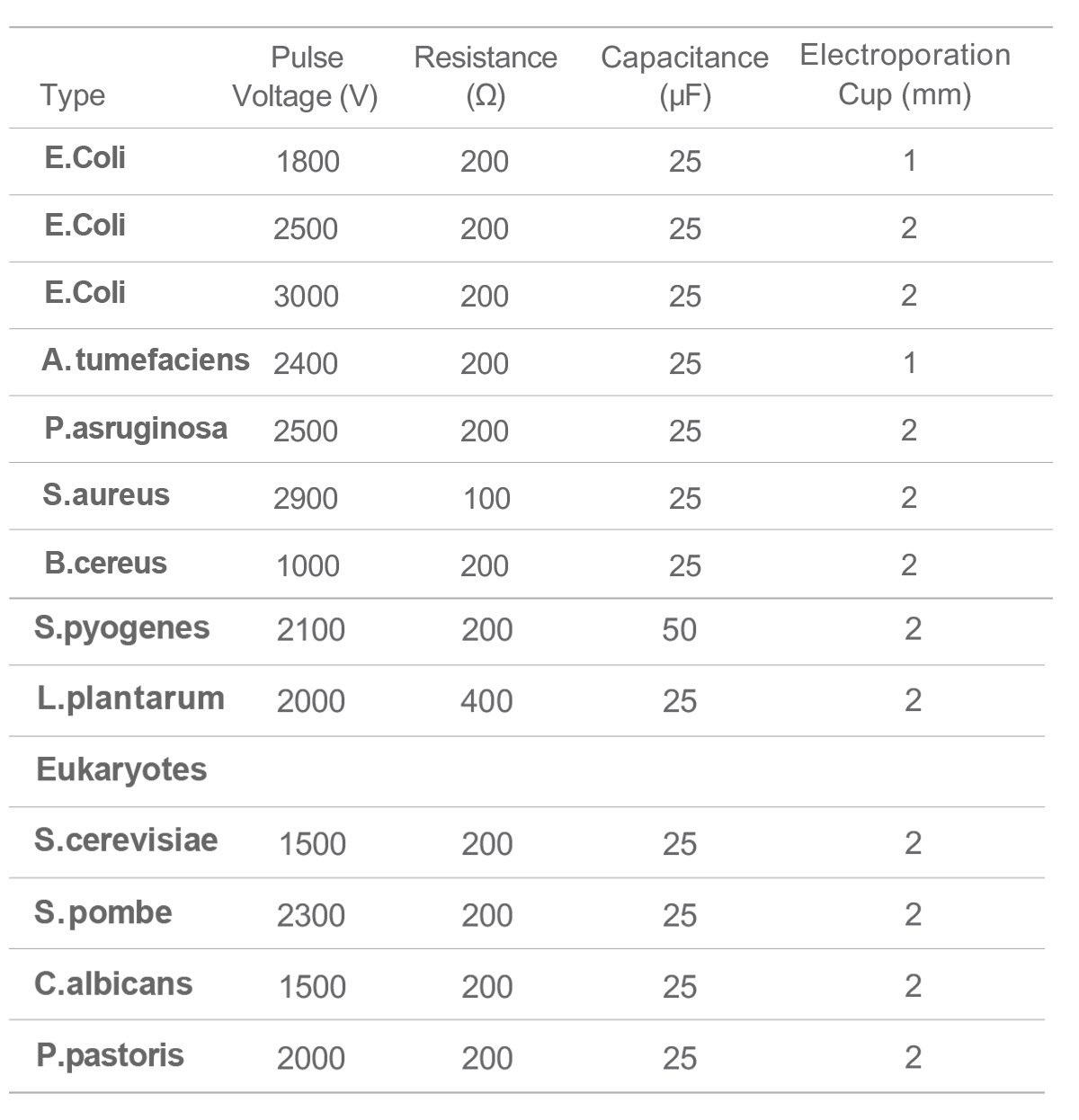
Nota: Debido a las variaciones en las condiciones experimentales de los distintos laboratorios, los parámetros anteriores son sólo de referencia.
Ejemplos de experimentos
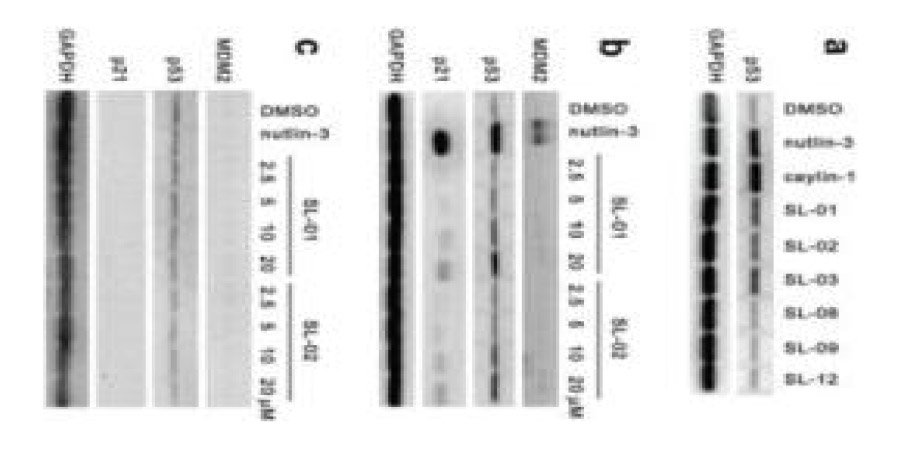
1、 LIJ, ZHANG S, GAO L, et al. A cell-based high-throughput assay for the screening of small-molecule inhibitors of p53- MDM2 interaction [J]. Revista de cribado biomolecular, 2011.
2、ZHANG SY, LIJ, XIE X. Discovery and characterization of novel small molecule agonists of G protein-coupled receptor 119 [J]. Acta pharmacologica Sinica, 2014.
1、LIJ y sus colegas analizaron los inhibidores de moléculas pequeñas de las interacciones proteínicas p53-MDM2 basándose en el cribado de alto rendimiento.
2、ZHANG SY y sus colegas descubrieron e identificaron un único agonista del receptor 119 acoplado a proteína G.